
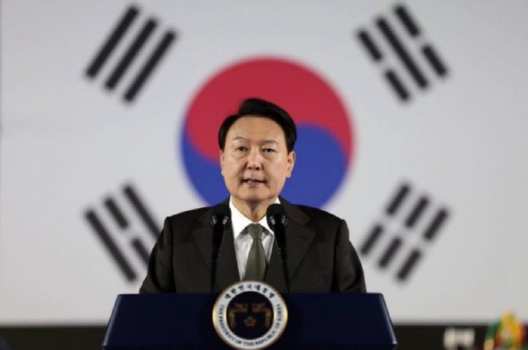
 The Seoul Central District Court on Thursday found former President Yoon Suk Yeol guilty of insurrection and undermining the constitution, sentencing him to life imprisonment.
The court ruled that Yoon’s declaration of martial law in December 2024 was aimed at paralysing the National Assembly of South Korea and consolidating power.
Delivering judgment, presiding judge Jee Gwi-yeon said Yoon’s actions amounted to an intentional plot to usurp democratic authority.
He held that Yoon mobilised security forces illegally to detain politicians and weaken the opposition-controlled legislature.
“The declaration of martial law resulted in enormous social costs, and it is difficult to find any indication that the defendant has expressed remorse,” Jee said. “We sentence Yoon to life imprisonment.”
Prosecutors had sought the death penalty, though South Korea has not carried out executions since 1997.
Yoon, 65, is expected to appeal the verdict. He has consistently denied wrongdoing, saying his actions were meant to “safeguard freedom” and restore constitutional order.
Thousands of his supporters gathered outside the courthouse in Seoul, demanding that the charges be dropped.
The court also sentenced former Defence Minister Kim Yong-hyun to 30 years in prison for his role in the attempted power grab.
Yoon had previously been convicted on separate charges, including fabricating official documents and destroying potential evidence.
Born in Seoul in 1960, Yoon studied law and rose through the ranks as a public prosecutor known for his anti-corruption work.
He played a key role in the 2016 impeachment of former President Park Geun-hye, who was later jailed for abuse of power. He also pursued corruption cases linked to the administration of Moon Jae-in.
Yoon later emerged as the candidate of the People Power Party and won the 2022 presidential election by a narrow margin.
His presidency was marked by several controversies, including the handling of the 2022 Halloween crowd crush that killed more than 150 people, frequent use of presidential vetoes, and disputes over economic management and press freedom.
Andrew Mountbatten-Windsor Arrested In UK Over Misconduct Probe
American Civil Rights Icon Rev. Jesse Jackson Dies At 84
China To Scrap Tariffs On Imports From 53 African Countries
African Union Declares Colonialism, Slavery Crimes Against Africa