
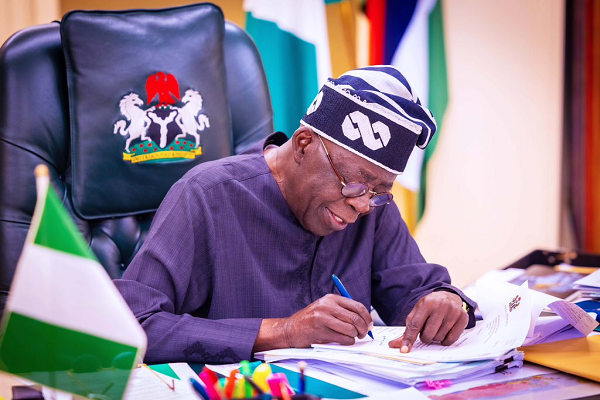
 President Bola Tinubu has signed the Electoral Act, 2022 (Repeal and Re-Enactment) Bill 2026 into law, following its passage by the National Assembly of Nigeria.
The bill, which has generated intense debate ahead of the 2027 general elections, focuses on the transmission of election results, particularly the use of electronic and manual systems.
The Senate approved the bill after a heated session triggered by a demand for division over Clause 60 by Enyinnaya Abaribe. Senate President Godswill Akpabio initially said the request had been withdrawn, a claim disputed by opposition lawmakers.
Deputy Senate President Barau Jibrin and Senate Leader Opeyemi Bamidele cited legislative procedures in defence of reopening the debate, leading to further disagreements.
Abaribe later moved for a division on Clause 60(3), seeking to remove provisions allowing manual transmission if electronic systems fail. The vote ended with 55 senators supporting the proviso and 15 opposing it.
Earlier, the Senate had commenced a clause-by-clause review after rescinding previous amendments. Proceedings stalled at Clause 60, forcing consultations and a brief closed-door session.
In the House of Representatives, lawmakers also clashed over a motion to reverse compulsory real-time transmission of results. The motion was moved by Francis Waive.
Speaker Tajudeen Abbas ruled in favour of the motion through a voice vote, sparking protests and leading to an executive session. The House had earlier adopted real-time transmission to the IReV in December 2025.
With presidential assent, the amended law now governs the 2027 elections. It upholds electronic transmission while permitting manual backup in cases of technical failure, a compromise that continues to divide political stakeholders.
Senate Passes Electoral Act Re-Enactment Bill After Tense Debate
President Tinubu Reaffirms Commitment To Defeat Banditry, Terrorism
FG Approves N5bn Relief For Kano Market Fire Victims
El-Rufai Detained By EFCC Over N432bn Probe, Faces Cybercrime Charges