
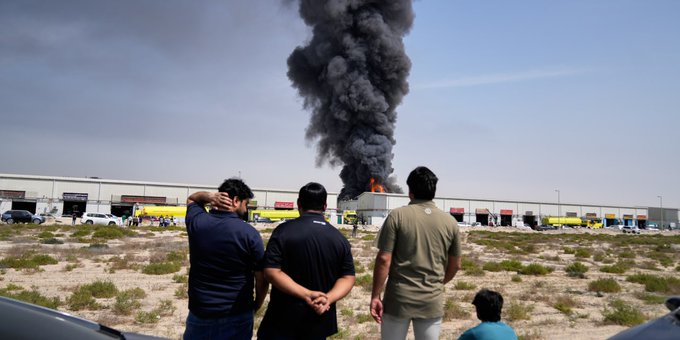
 The conflict between the United States, Israel, and Iran has escalated sharply, raising fears of a prolonged regional war with global consequences.
The fighting, which began with coordinated air and missile strikes by the United States and Israel on Iranian military and security facilities, has widened into a multi-front confrontation involving missile attacks, drone strikes, and proxy engagements across the Middle East.
U.S. and Israeli forces launched large-scale operations aimed at degrading Iran’s military infrastructure, targeting command centres, weapons depots, and air defence systems. Officials in Washington and Tel Aviv said the campaign was designed to curb Iran’s regional influence and weaken its capacity to support allied militant groups.
Israeli authorities described the operation as a necessary step to prevent future threats, while U.S. officials said the strikes were carried out in coordination with allies to protect regional stability.
Iran responded swiftly with missile and drone attacks on Israeli cities and U.S. military installations across the Gulf region. Several bases and strategic facilities in neighbouring countries were placed on high alert as air defence systems intercepted incoming projectiles.
Tehran vowed to continue its response, warning that any further attacks on its territory would be met with “stronger and broader” retaliation.
The conflict has spread beyond the main combatants, drawing in armed groups allied with Iran. Rocket and drone attacks have been reported along Israel’s northern borders, prompting heavy Israeli airstrikes in neighbouring territories.
Several countries in the region have closed parts of their airspace, suspended commercial flights, and tightened security around critical infrastructure, including airports, ports, and energy facilities.
The war has taken a growing toll on civilians. Residential areas, transport hubs, and public utilities have been affected by the fighting, forcing thousands of families to flee their homes.
Authorities in Israel and Iran have imposed emergency measures, including school closures and restrictions on public gatherings, as residents seek shelter from ongoing attacks.
Hospitals across the region have reported an influx of casualties, while humanitarian agencies warn that continued escalation could overwhelm local health systems.
The conflict has disrupted international travel and shipping routes, particularly around key waterways used for oil and gas exports. Energy prices have risen sharply, reflecting fears of supply interruptions.
Global markets have reacted with volatility, and several governments have urged their citizens to avoid travel to affected areas.
The United Nations and other international bodies have called for restraint, warning that the war could spiral into a wider regional crisis.
Diplomatic efforts to broker a ceasefire have so far made little progress, as both sides insist on achieving their military objectives before considering negotiations.
With neither side showing signs of backing down, analysts warn that the conflict could enter a prolonged and dangerous phase. Continued fighting risks drawing in more regional actors and deepening humanitarian and economic damage.
As airstrikes and retaliatory attacks continue, the Middle East remains on edge, with the world watching closely to see whether diplomacy can halt a war that threatens to reshape the region’s security landscape.
Iran’s Supreme Leader Ayatollah Ali Khamenei Killed In U.S.–Israel Strikes
US And Israel Strike Iran, Tehran Launches Retaliatory Attacks
IMF Releases $2.3bn To Egypt After Programme Reviews
South Africa Uncovers Over 4,000 ‘Ghost Workers’ In Payroll Audit