
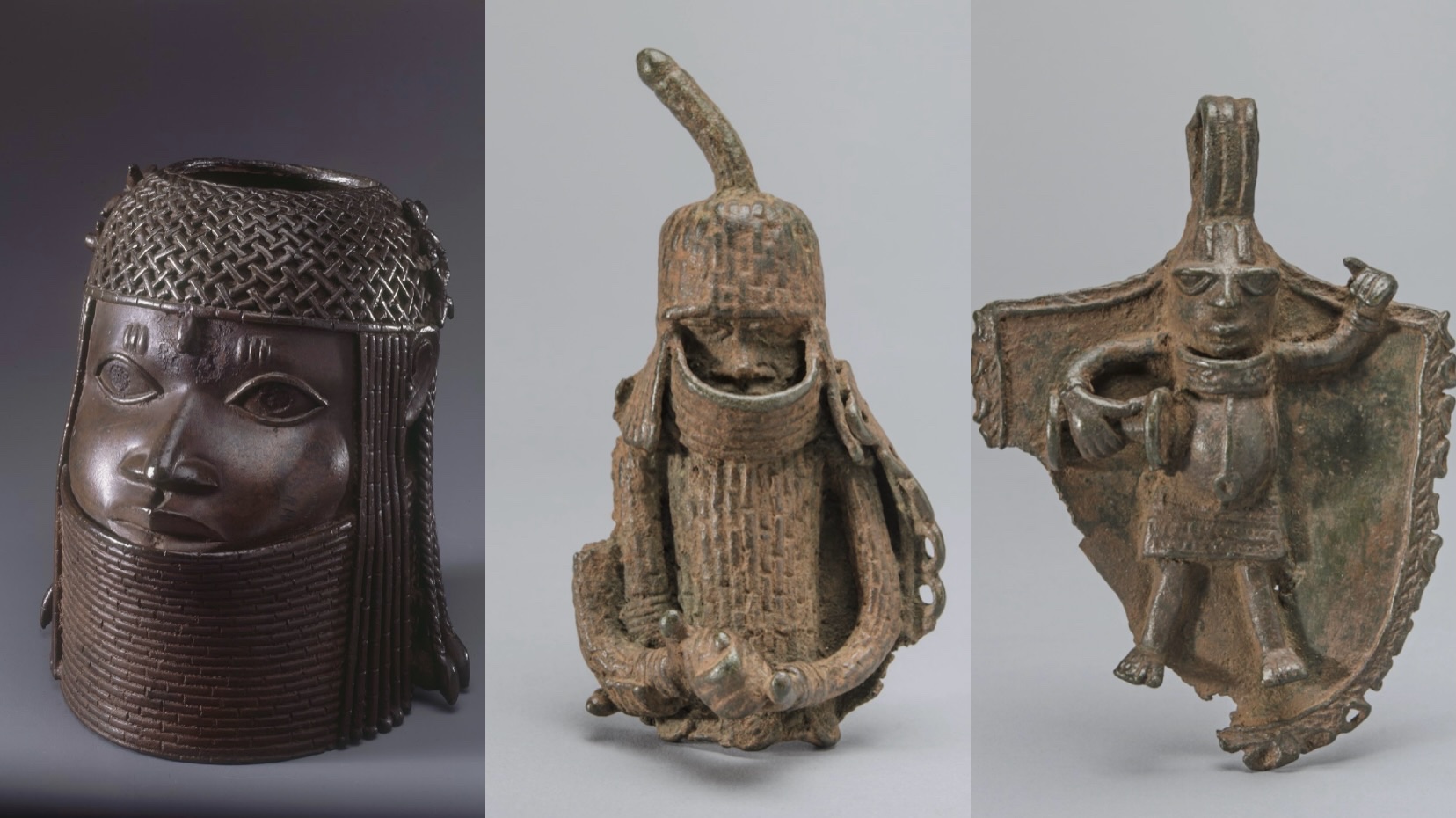
 Cambridge University has transferred the legal ownership of 116 Benin artefacts to Nigeria, marking a significant step in efforts to address the loss of cultural heritage during the colonial era.
The artefacts, which are housed at the university’s Museum of Archaeology and Anthropology, are now legally owned by Nigeria’s National Commission for Museums and Monuments (NCMM).
The decision was announced on Monday following a formal request submitted by the NCMM in January 2022 for the return of objects taken during the 1897 sacking of Benin City. Cambridge’s Governing Council approved the request, with final authorization granted by the UK Charity Commission.
The collection includes brass castings, ivory works, and wooden sculptures seized by British troops during the 1897 expedition to Benin.
Cambridge said arrangements for the physical return of most of the artefacts would be made at a later date. However, a small number will remain on loan in the United Kingdom, where they will continue to be displayed and studied.
In a statement, the university said the decision followed years of research and dialogue with Nigerian stakeholders, including the Benin Royal Court, artists, and academics. Officials of the museum have visited Benin City several times since 2018 and have also hosted Nigerian delegations in Cambridge.
Director General of the NCMM, Olugbile Holloway, described the transfer as a turning point in Nigeria’s quest to recover its cultural heritage. He said the return restores the pride and dignity lost when the artefacts were taken and expressed hope that other international institutions would follow Cambridge’s example.
Also speaking, Professor Nicholas Thomas, Director of the Museum of Archaeology and Anthropology, said growing international support for repatriation had helped drive the decision. He described the process as the outcome of nearly a decade of collaboration with Nigerian partners.
Atiku Abubakar Claims Private Bank Details Were Compromised
Tinubu Orders EFCC To Vacate Court Order Freezing Osun Government Account
Tinubu Hails Rescue Of 308 Kidnap Victims In Niger, Kwara
Osun Sues EFCC Over Freeze On State Government Bank Accounts