
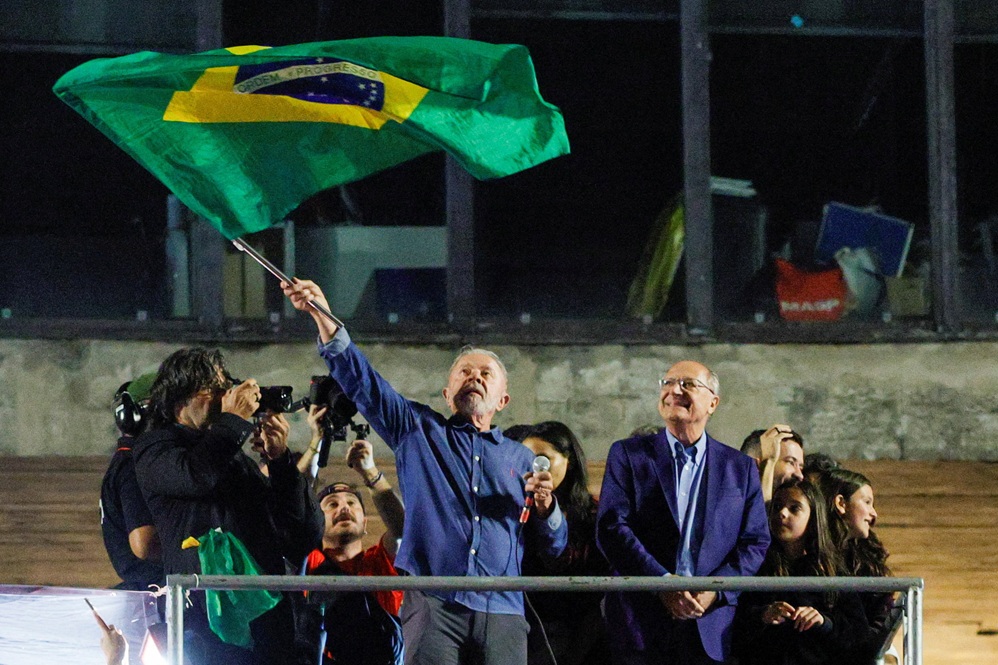
 Brazilian President Luiz Inácio Lula da Silva has won re-election, defeating right-wing challenger Flávio Bolsonaro in a closely contested run-off to secure an unprecedented fourth, non-consecutive term in office.
Official results announced by Brazil’s Superior Electoral Court showed Lula winning 51.79 per cent of valid votes, equivalent to 64.26 million votes, against Bolsonaro’s 48.21 per cent, or 59.83 million votes. The result gives Lula a margin of approximately 4.43 million votes.
The victory, declared on Sunday, October 25, marks a remarkable political comeback for the 80-year-old leader, who trailed Bolsonaro in the first round of voting earlier this month. Lula’s win also makes him the first Brazilian president to secure four non-consecutive terms.
Celebrations erupted in several cities, including São Paulo and Rio de Janeiro, as supporters took to the streets waving Brazilian flags and Workers’ Party banners. In his victory remarks, Lula pledged to govern for all Brazilians, defend democratic institutions and protect the country’s national sovereignty.
However, Bolsonaro, the 45-year-old son of former President Jair Bolsonaro, rejected the outcome and called for the election results to be annulled. His challenge followed a controversial decision to extend voting hours by two hours after reports of transport disruptions and severe weather affected parts of the country.
Lula’s victory comes amid deep political divisions and public concerns over the cost of living, crime and economic stability. His campaign focused on social welfare, poverty reduction, tackling inequality and environmental protection.
The result also has wider implications for Latin America, where right-wing movements have gained ground in recent elections. Lula’s continued leadership is expected to reinforce Brazil’s position as a prominent left-wing voice in the region and shape its relations with major global powers.
Lula is scheduled to begin his fourth non-consecutive presidential term on January 5, 2027. His administration will face the challenge of bridging Brazil’s political divide while delivering on its economic and social commitments.
Uganda Says No Confirmed Ebola Cases Amid Reported Infection In Nigeria
French President Macron Condemns Intelligence Failures After Protests
IMF Warns Falling Aid Leaves African Economies Vulnerable
Pope Leo XIV Undergoes Successful Surgery To Remove Lung Tumour