
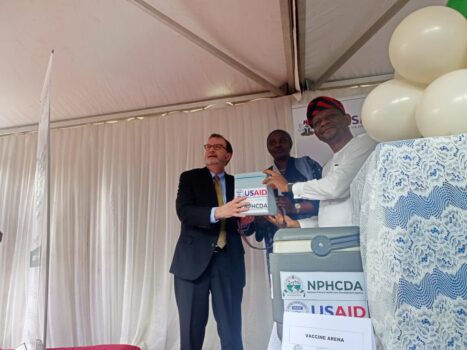
 The United States government has donated 10,000 doses of the Jynneos vaccine to Nigeria, a critical step in the ongoing fight against mpox. The vaccine, approved by the U.S. Food and Drug Administration (FDA), is designed to prevent smallpox and mpox in adults aged 18 and older who are at risk of mpox infection.
During the official handover ceremony in Abuja, the Coordinating Minister of Health and Social Welfare, Prof. Muhammad Pate, expressed gratitude to the U.S. government for its support. Represented by the Permanent Secretary of the ministry, Daju Kachollom, Pate emphasized the importance of the donation in bolstering Nigeria’s public health efforts.
“This donation reflects the spirit of cooperation and collaboration that has defined our relationship over the years,” Pate said. “The Federal Ministry of Health is committed to ensuring the well-being of Nigerians, and this vaccine will play a crucial role in our efforts.”
Pate highlighted the government’s dedication to transforming the health sector, noting the leadership of the Coordinating Minister and Dr. Tunji Alausa, the Minister of State for Health. “Together, we are making significant strides in improving healthcare in Nigeria,” he added.
The minister also extended his appreciation to international development partners, including USAID, PEPFAR, WHO, UNICEF, and other UN organizations, for their continued collaboration in addressing public health challenges in Nigeria.
Mpox, a rare viral zoonotic disease, primarily occurs in remote villages of Central and West Africa near tropical rainforests. It is caused by the mpox virus, which belongs to the Orthopoxvirus genus in the Poxviridae family. The donation of Jynneos vaccines is expected to provide much-needed protection against the disease in Nigeria’s vulnerable populations.
Tinubu Kicks Off 2027 Campaign, Blames Opposition For Poverty
24 State Assemblies Approve Bill For State Police In Nigeria
Nollywood Mourns Veteran Actor Francis Duru, Dead At 57
Lagos Building Collapse: One Dead, Three Rescued Alive In Fadeyi