
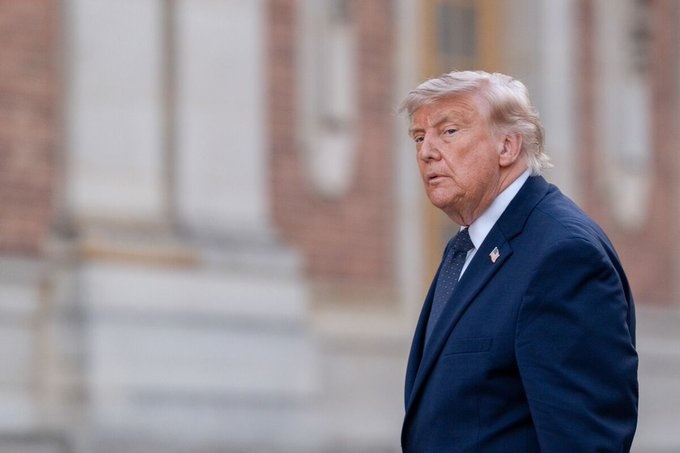
 The United States and Iran have signed an initial peace agreement aimed at ending months of conflict, with both sides committing to negotiate a final settlement within 60 days.
The memorandum of understanding, signed by US President Donald Trump and Iranian President Masoud Pezeshkian, provides for the immediate cessation of military operations, the reopening of the Strait of Hormuz, a proposed $300 billion reconstruction plan for Iran, and the termination of US sanctions on Tehran.
Under the agreement, Iran reaffirmed that it would not develop nuclear weapons and agreed to dilute its enriched uranium under the supervision of the International Atomic Energy Agency (IAEA). However, negotiations on Iran’s nuclear programme are expected to continue during the 60-day period, which may be extended by mutual consent.
Speaking at the G7 summit in France, Trump said the deal would help avert an economic crisis caused by the conflict, which had disrupted global energy markets and driven up oil prices. He warned, however, that military action remained an option if a final agreement was not reached.
Iranian parliamentary speaker Mohammad Bagher Ghalibaf welcomed the deal but expressed continued distrust of the United States, warning that Iran remained prepared to respond if necessary.
The agreement also grants ships free passage through the Strait of Hormuz for 60 days, though Iranian officials indicated future transit charges remain possible.
Despite the breakthrough, challenges remain, including tensions involving Israel and Hezbollah, as well as criticism from US lawmakers. Republican Senator Bill Cassidy described the agreement as “the worst foreign policy blunder in decades.”
The deal marks the most significant diplomatic effort yet to end the conflict, while negotiations continue over key security and nuclear issues.
Uganda Says No Confirmed Ebola Cases Amid Reported Infection In Nigeria
French President Macron Condemns Intelligence Failures After Protests
IMF Warns Falling Aid Leaves African Economies Vulnerable
Pope Leo XIV Undergoes Successful Surgery To Remove Lung Tumour