
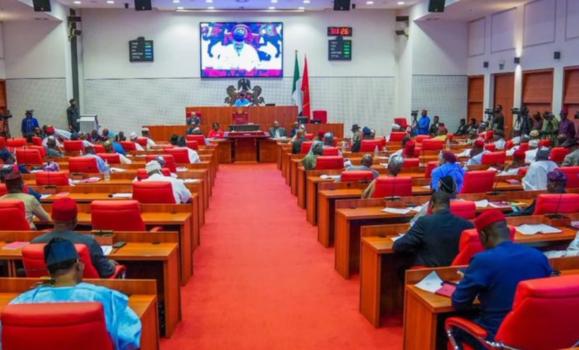
 The Senate on Wednesday passed the bill seeking to establish state police in Nigeria, marking a major step toward decentralising the country’s policing system and strengthening internal security.
The bill was approved after lawmakers considered and adopted the report of the Senate Committee on the Review of the Constitution, chaired by Deputy Senate President Barau Jibrin. Senate President Godswill Akpabio announced the passage following a manual vote in which more than two-thirds of the 87 senators present supported the proposal.
The legislation seeks to create a dual policing structure, allowing state police services to operate alongside the existing federal police system. Under the proposed framework, each state police service will be headed by a Commissioner of Police appointed by the governor and confirmed by the State House of Assembly.
The bill includes safeguards against political abuse, stipulating that state police commissioners cannot arrest, detain or investigate individuals, political parties or groups for criticising the government except in accordance with the law. It also provides mechanisms for reviewing unlawful directives and protects commissioners from arbitrary removal.
The proposed law empowers the Federal Police Service to intervene in state policing operations under specific circumstances, including threats to national security, breakdown of public order, abuse of police powers or at the request of a state governor. Any intervention must be temporary, proportionate and subject to judicial review.
The bill further provides for the establishment of State Police Service Commissions to oversee recruitment, promotions, discipline and accountability within state police formations.
In addition, existing regional and community security outfits such as Amotekun, Ebube Agu and Hisbah will not automatically become state police agencies and will not be permitted to exercise police powers or bear firearms unless authorised by the Constitution and an Act of the National Assembly.
With Senate approval secured, the bill will now proceed to the House of Representatives for concurrence. If passed, it will be transmitted to the 36 State Houses of Assembly for ratification, requiring approval by at least 24 state legislatures before it can become law.
Several dignitaries, including governors, senior government officials and attorneys-general, were present in the Senate chamber to observe the historic vote.
Tinubu, Governors Move To Reduce Transport Fares Nationwide
Tinubu Swears In Abel Enitan As Head Of Civil Service
EFCC To Appeal Ruling On Nine Properties Linked To Malami
Umahi Berates Benin-Asaba Road Concessionaire Over Slow Progress