
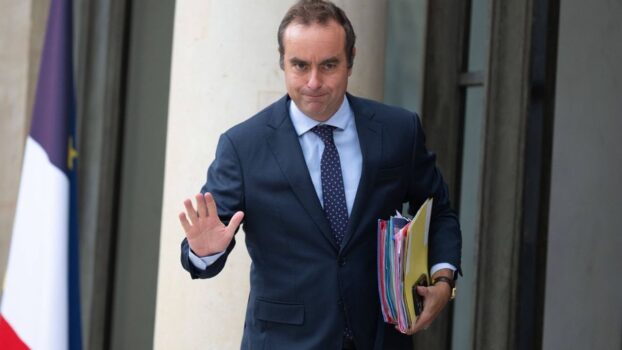
 France was thrown into fresh political turmoil on Monday after Prime Minister Sébastien Lecornu resigned just 26 days after assuming office, marking one of the shortest tenures in modern French history.
Lecornu, who took over from Gabriel Attal in early September, formally submitted his resignation to President Emmanuel Macron following weeks of political deadlock and fierce backlash over his newly appointed cabinet. His exit deepens a crisis that has left Macron’s government struggling to maintain stability amid growing opposition pressure and legislative paralysis.
In his resignation statement, Lecornu blamed opposition parties for frustrating efforts to form a workable coalition, saying each political bloc was “acting as if it had its own mandate to govern, when in truth, none does.” He described the situation as “untenable” and said he was stepping aside “to allow for a political reset that serves the interests of the French people.”
President Emmanuel Macron accepted Lecornu’s resignation and thanked him for “his sense of duty and dedication under extremely difficult circumstances.” The Élysée Palace said consultations have begun on appointing a new prime minister, but Macron faces a difficult path to securing parliamentary support for any successor.
Lecornu’s resignation comes amid deep divisions in France’s National Assembly, where no single party commands a majority following the recent snap elections. Attempts to form a coalition between centrist, left-wing, and conservative blocs have repeatedly failed, leaving Macron’s government unable to pass key legislation, including the 2026 budget proposal.
The resignation has reignited calls from opposition leaders for Macron to dissolve parliament and call for new elections. Left-wing leader Jean-Luc Mélenchon declared that the government “has lost all legitimacy,” while Marine Le Pen of the National Rally said Lecornu’s exit “proves that Macron’s regime has run out of road.”
As France marks yet another political shake-up, Macron’s team is racing to prevent a full-blown government collapse. Sources at the Élysée hinted that a replacement could be named within days, with names like Finance Minister Bruno Le Maire and former Prime Minister Élisabeth Borne reportedly under consideration.
Meanwhile, the French public remains weary of the continued political drama. Recent polls show growing disillusionment, with a majority of respondents saying they have “little or no confidence” in the current government to resolve the country’s economic and social challenges.
US TV networks Halt White House Coverage Over Media Access Dispute
OpenAI Reveals Six Concerning AI Behaviour Incidents
Trump Threatens European Union With Tariffs Over Canada Partnership
US Imposes Visa Restrictions On South Africans Over Afrikaner Claims