
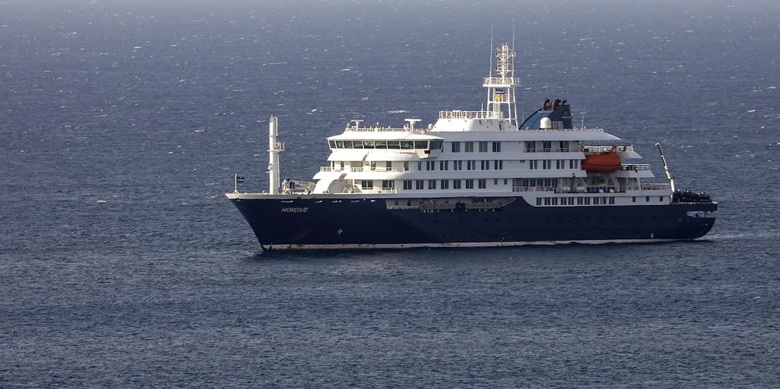
 Spanish authorities have scheduled the final evacuation flights for passengers aboard a cruise ship affected by a deadly hantavirus outbreak near the island of Tenerife, as health officials intensify monitoring efforts following multiple deaths linked to the virus.
Spain’s Health Minister, Monica Garcia, said on Sunday that 94 passengers had already been evacuated from the vessel.
According to officials, an Australian repatriation flight is expected to transport six passengers, while a Dutch evacuation flight will carry 18 people, including travellers from countries that did not organise separate evacuation arrangements.
The first group evacuated from the ship included 14 Spanish nationals who were airlifted on Sunday aboard a military aircraft to Madrid, where they were transferred to a military hospital for quarantine and medical testing.
The evacuation operation sparked criticism from Fernando Clavijo, who raised concerns over the handling of the situation in the Canary Islands.
However, Spanish authorities dismissed fears that infected rodents from the ship could reach the shore, insisting that the possibility of Andean rodents swimming to the Canary coast was “zero.”
The outbreak has been linked to the Andes strain of hantavirus, a rare but dangerous variant that scientists say is the only known form of the virus capable of human-to-human transmission, usually through close contact.
According to the World Health Organization, five confirmed cases have been recorded so far, including three deaths.
Health officials said two passengers who later died had travelled through Argentina, Chile and Uruguay before boarding the cruise ship.
The Centers for Disease Control and Prevention has classified the incident as a Level 3 emergency response, its lowest emergency activation category.
CDC officials also disclosed that evacuated passengers would be monitored for approximately six weeks, reflecting the virus’s incubation period, while health authorities across several US states continue tracking travellers who had already left the vessel before the outbreak was officially confirmed.
Hantavirus is typically transmitted through contact with infected rodents or their droppings, though experts say the Andes strain presents additional risks because of its ability to spread between humans.
Pope Leo XIV Undergoes Successful Surgery To Remove Lung Tumour
Houthi Attacks On Saudi Airports Kill 14, Injure 311 As Regional Tensions Escalate
Trump Says Putin Agrees To Release Russian Diesel To United States
Navanethem “Navi” Pillay Wins Nobel Peace Prize For Promoting Human Rights