
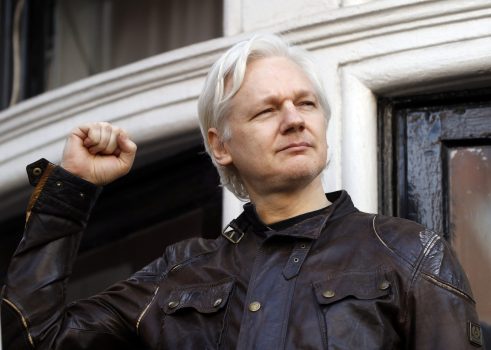
A British judge on Monday denied a request from the United States to extradite WikiLeaks founder, Julian Assange. District Judge Vanessa Baraitser argued that Assange was likely to commit suicide if sent overseas to face espionage charges.
District Judge Vanessa Baraitser also called such a move “oppressive” because of Assange’s mental health but the U.S. government says it will appeal her decision.
U.S. prosecutors have indicted Assange on 17 espionage charges and one charge of computer misuse over WikiLeaks’ publication of leaked military and diplomatic documents a decade ago. The charges carry a maximum sentence of 175 years in prison.
Assange’s lawyers plan to ask for his release from a London prison where he has been held for more than a year-and-a-half.
Assange’s American lawyer, Barry Pollack, said the legal team was “enormously gratified by the U.K. court’s decision denying extradition.”
“The effort by the United States to prosecute Julian Assange and seek his extradition was ill-advised from the start,” he said. “We hope that after consideration of the U.K. court’s ruling, the United States will decide not to pursue the case further.”
Lawyers for Assange argue that he was acting as a journalist and is entitled to First Amendment protections of freedom of speech for publishing leaked documents that exposed U.S. military wrongdoing in Iraq and Afghanistan.
The judge, however, said Assange’s actions, if proven, would “amount to offenses in this jurisdiction that would not be protected by his right to freedom of speech.”
OpenAI Reveals Six Concerning AI Behaviour Incidents
Trump Threatens European Union With Tariffs Over Canada Partnership
US Imposes Visa Restrictions On South Africans Over Afrikaner Claims
NATO Jets Shoot Down Drone In Lithuanian Airspace