
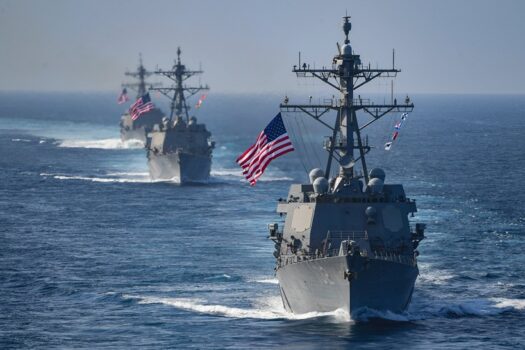
 The United States has begun a naval blockade of Iranian ports, marking a major escalation in the ongoing conflict, even as global oil prices eased on renewed hopes for diplomatic talks between Washington and Tehran.
The operation, reported on April 13, 2026, restricts maritime traffic entering and exiting Iranian ports, including routes linked to the strategic Strait of Hormuz, a key artery for global energy shipments. 2026 Strait of Hormuz crisis
The move follows failed peace negotiations and is aimed at increasing pressure on Iran over its regional and nuclear activities. U.S. officials say the blockade is intended to limit Iran’s ability to export oil and disrupt what Washington describes as hostile maritime operations in the Gulf.
Iran has condemned the action, describing it as “piracy,” and warned of retaliation if its shipping interests are further targeted. Regional tensions have already disrupted global energy flows in recent weeks.
Despite the military escalation, oil prices declined in early trading, as investors reacted to signals that backchannel diplomacy between the two countries may still be possible. Markets had previously surged above $100 per barrel amid fears of supply shortages but later eased as expectations of negotiations grew.
Analysts say the situation remains highly volatile, with energy markets swinging between concerns over supply disruptions and optimism about a potential de-escalation.
The blockade adds another layer to an already fragile geopolitical landscape, with the Strait of Hormuz remaining one of the world’s most sensitive chokepoints for crude oil transportation.
Navanethem “Navi” Pillay Wins Nobel Peace Prize For Promoting Human Rights
Russian Strikes Kill Thirty-Two, Injure Hundred Across Ukraine
Kenya Records First-Ever Ebola Death After Infected Man Returns From DR Congo
Ethiopia, Eritrea Cut Diplomatic Ties As Tigray Fighting Escalates